 +49 (0) 2571 99798-0
 info@greiwing.com


Electric Truck Range in 2026:
How far can electric trucks really go?
Last updated: October 29, 2026
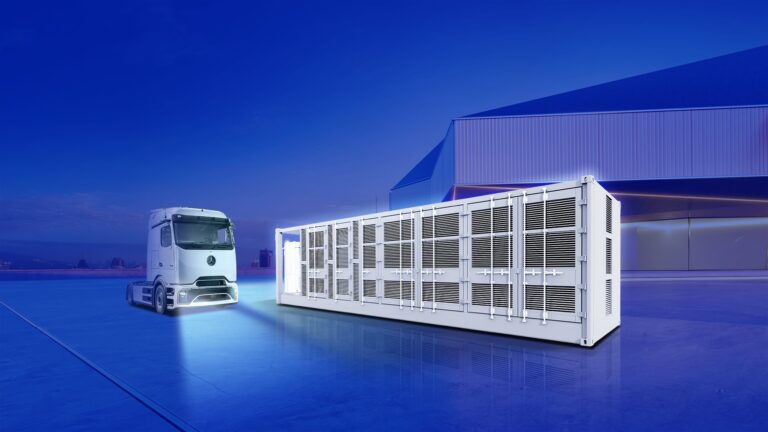
Depending on the vehicle model and operating conditions, a modern electric truck can travel several hundred kilometers on a single battery charge. According to manufacturer specifications, today’s heavy-duty electric trucks have a range of up to 700 kilometers, although the actual distance traveled depends on the route, the load, and external conditions.
For transportation companies, therefore, it is not so much the maximum range that matters as the question: Which routes can be handled reliably, cost-effectively, and without disrupting operations using an electric truck?
What is the range of modern electric trucks?
The development of battery-electric commercial vehicles has made significant progress in recent years. In heavy-duty long-haul transport in particular, vehicles are now available with ranges that were almost unimaginable just a few years ago.
Three examples illustrate the current state of the art:
- Mercedes-Benz eActros 600: a range of approximately 500 km without recharging, with a gross vehicle weight of 40 metric tons under defined test conditions.
- MAN eTGX: Up to 570 km range as a standard tractor-trailer under favorable operating conditions.
- Volvo FH Aero Electric with extended range: up to 700 km, according to the manufacturer. Series production of the new generation began in September 2026.
These figures do not represent guaranteed daily ranges. They depend on the specific vehicle configuration and the underlying test conditions.
What factors influence actual range?
The range of an electric truck cannot be determined solely by battery capacity. In real-world transport operations, several factors come into play.
Topography: Uphill gradients increase energy consumption. On downhill sections, some of the kinetic energy can be recovered through regenerative braking. However, it is not possible to recover all of the energy that was previously expended.
Payload: The higher the total weight, the greater the energy consumption can be, especially on routes with many hills.
Outside temperature: Low temperatures affect battery performance and may increase the energy required to maintain the temperature of the battery and the cab.
Speed and Driving Style: High speeds, rapid acceleration, and poor aerodynamics affect fuel consumption. Anticipatory driving can help save energy.
Accessory loads: Air conditioning, heating, and additional electrical loads must be taken into account when planning range.
Therefore, the specific operational profile of the vehicle is always the deciding factor.
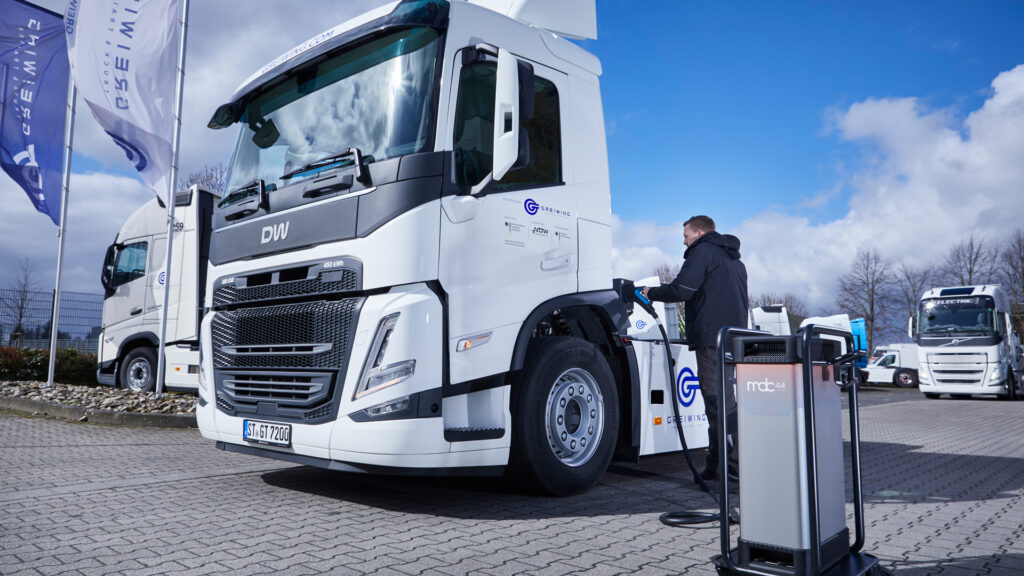
Reduce Range Anxiety Through Smart Planning
The fear of breaking down in an electric truck while on a trip is understandable. However, it doesn't have to be an obstacle to making the switch to electric vehicles.
Especially for recurring routes, travel distances, energy consumption, and charging times can be analyzed in advance.
In regional and distribution transport, many routes can already be covered without intermediate charging. In long-haul transport, however, balancing range, charging infrastructure, and travel times becomes more important.
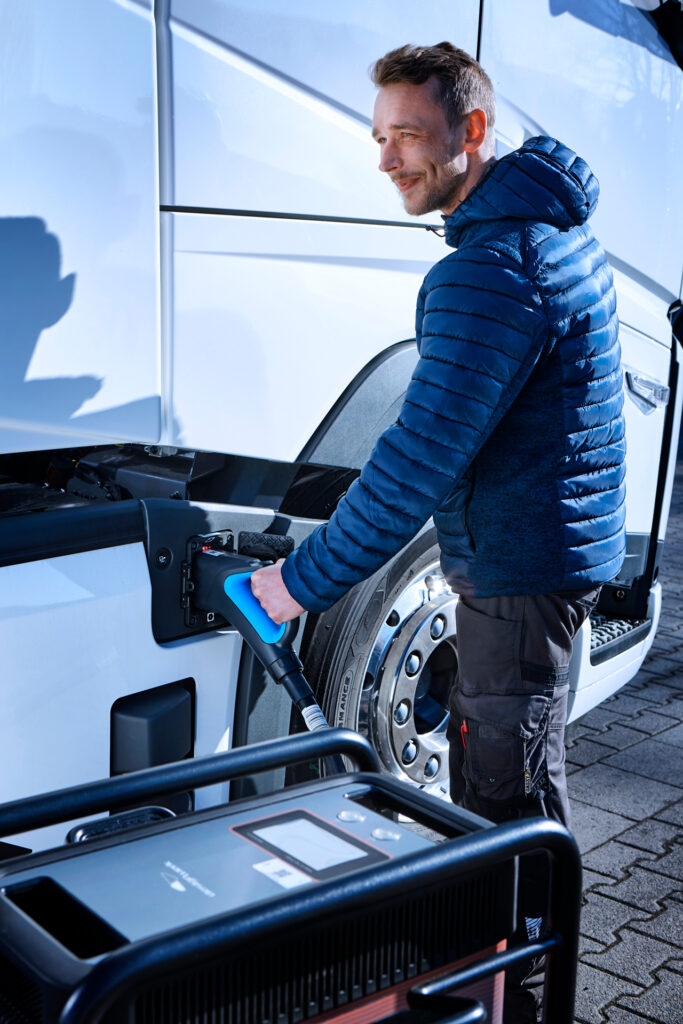
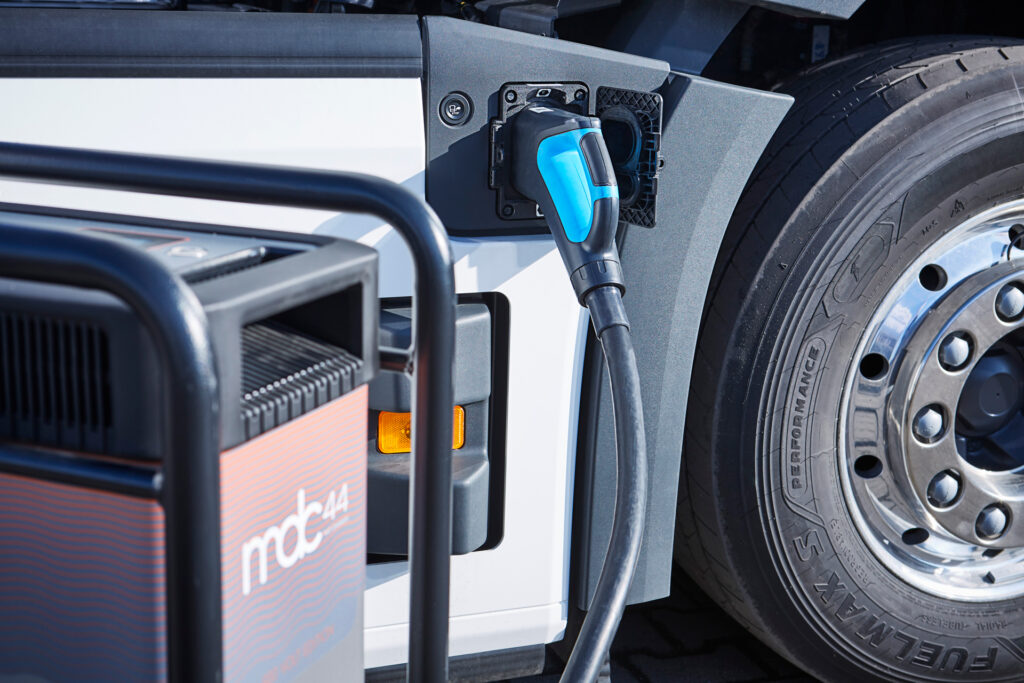
Modern charging systems enable high-power charging. How long a charging session actually takes depends, among other things, on the charging power of the vehicle and the charging station, the battery's state of charge, and the amount of energy required.
So the key question isn't just how far an electric truck can travel, but also when, where, and how long it can be charged.
How Greiwing Truck & Trailer Analyzes Range
At Greiwing Truck & Trailer, we don't view range as a theoretical maximum, but rather in the context of the actual transport order.
An important part of our consulting services is topography analysis. This involves examining how the elevation profile of a route affects the expected energy consumption.
In addition, we take into account factors such as vehicle configuration, load, and outside temperature. Even challenging conditions—such as temperatures of −10 °C—are factored into our analysis.
On this basis, realistic operational scenarios can be developed and potential range risks can be identified early on.
Instead of basing your calculations solely on optimal conditions, we recommend factoring in unfavorable scenarios and allowing for sufficient energy reserves.
Why a usage analysis is more important than maximum reach
A vehicle with a manufacturer-rated range of 500 km isn't automatically the best solution for every 400-km trip. Conversely, an electric truck with a shorter range may be perfectly adequate for a predictable daily route.
Among other things, the following are relevant:
- The actual length of the daily tours
- The usable battery capacity and the required reserve
- The route profile and seasonal operating conditions
- Available charging stations at your location and on the go
- Integrating Loading Times into the Transportation Process
It is only the combination of these factors that determines which vehicle can be operated economically and reliably.
Frequently Asked Questions About Electric Truck Range
Depending on the model and configuration, modern heavy-duty electric trucks have a manufacturer-rated range of several hundred kilometers. Some long-haul models already offer a range of up to 700 km. The actual range may vary depending on factors such as load, temperature, speed, and topography.
At low temperatures, the range may decrease because, for example, the battery and cabin heating require additional energy. The extent of this difference depends on the vehicle and specific usage conditions. Therefore, a general percentage figure is not reliable.
Yes. Modern electric tractor-trailers also make longer hauls possible. This requires a suitable vehicle configuration, realistic energy planning, and reliable charging stations along the route.
Greiwing Truck & Trailer offers personalized consulting that includes a route-specific topography analysis. This analysis takes relevant operating conditions into account to better assess the suitability of an electric truck for the planned routes.
Conclusion: Reach is not a matter of faith, but a matter of planning
The performance of modern electric trucks has improved significantly. Nevertheless, the decision to purchase an electric vehicle should not be based solely on the manufacturer's specifications.
With a thorough analysis of daily transportation tasks, a realistic range calculation, and an appropriate charging and deployment strategy, many transportation processes can already be electrified today.
Would you like to know if your routes can be driven with electric vehicles?
Greiwing Truck & Trailer supports you with personalized advice and a route-specific range analysis.
Learn more about GTT Zero and our electric truck solutions
Learn more about what matters most when it comes to scheduling electric trucks.
Sources for the technical range specifications: Mercedes-Benz Trucks, MAN and Volvo Trucks, September 2026